Saturday, April 30, 2011

Book Reading #13 - Opening Skinner's Box
Chapter 3: On Being Sane in Insane Places
Summary:
David Rosenhan conducted a clever experiment which was to basically test the idea of physicatrics in medicine. He got some people including himself to go to the hospital and get admitted and then acted completely normal to see how long it took for them to recognized as normal. The same idea for this experiment was used by the author who goes to hospitals to see how things have changed. She is not admitted to any hospitals but is usually diagnosed and given pills. Later, in a conversation with Robert Spitzer, Spitzer says that he thinks that doctors just don't know when to say "I don't Know".
Discussion:
I enjoyed this chapter more than the others so far. I thought it was funny how the author says that the Rosenhan experiment is really hated in the field even after 40 years because of how it tries to discredit the idea. I thought it was interesting how the author tried to mimic the experiment and nobody had ever heard of this story before and the "thud" voice. The results were interesting to how many doctors prescribed medicine with nothing more than a 10 minute examination even if they were just "light" medical pills.
Summary:
David Rosenhan conducted a clever experiment which was to basically test the idea of physicatrics in medicine. He got some people including himself to go to the hospital and get admitted and then acted completely normal to see how long it took for them to recognized as normal. The same idea for this experiment was used by the author who goes to hospitals to see how things have changed. She is not admitted to any hospitals but is usually diagnosed and given pills. Later, in a conversation with Robert Spitzer, Spitzer says that he thinks that doctors just don't know when to say "I don't Know".
Discussion:
I enjoyed this chapter more than the others so far. I thought it was funny how the author says that the Rosenhan experiment is really hated in the field even after 40 years because of how it tries to discredit the idea. I thought it was interesting how the author tried to mimic the experiment and nobody had ever heard of this story before and the "thud" voice. The results were interesting to how many doctors prescribed medicine with nothing more than a 10 minute examination even if they were just "light" medical pills.
Book Reading #12 - Coming of Age in Samoa
Chapter 4: The Samoan Household
Summary:
This chapter talked mainly about the structure of a Samoan household. It talked about how ranks influence the household and how they change. It gave real examples of households and how ranks influenced certain things.
Discussion:
This is an important chapter because it explains the structure and how Samoans view the household. I thought the most interesting part was dealing with the taupo title. I thought the example of the beggar was interesting too because of how the guy hung around all day and did everything for the family and only at the last second before bed he expressed his desire.
Summary:
This chapter talked mainly about the structure of a Samoan household. It talked about how ranks influence the household and how they change. It gave real examples of households and how ranks influenced certain things.
Discussion:
This is an important chapter because it explains the structure and how Samoans view the household. I thought the most interesting part was dealing with the taupo title. I thought the example of the beggar was interesting too because of how the guy hung around all day and did everything for the family and only at the last second before bed he expressed his desire.
Book Reading #11 - Design of Everyday Things
Chapter 4: Knowing What To Do
Summary:
Norman talks about the constraints in design. His example is a 13 piece Lego motorcycle. The constraints on doors is discussed next along with constraints of switches. He talked about how things should be made more visible or have an immediate effect after pressing something.
Discussion:
I liked this chapter because it is very important when thinking about design. I like the examples he gives because while making me laugh they make me evaluate some of the things I use everyday and notice the same flaws and how they could be improved.
Summary:
Norman talks about the constraints in design. His example is a 13 piece Lego motorcycle. The constraints on doors is discussed next along with constraints of switches. He talked about how things should be made more visible or have an immediate effect after pressing something.
Discussion:
I liked this chapter because it is very important when thinking about design. I like the examples he gives because while making me laugh they make me evaluate some of the things I use everyday and notice the same flaws and how they could be improved.
Wednesday, April 27, 2011
Paper Reading #30: A Multimodal Labeling Interface for Wearable Computing
Reference Information:
Title: A Multimodal Labeling Interface for Wearable Computing
Authors: Shanqing Li, Yunde Jia
Venue: IUI 2010, Hong Kong, ChinaComments:
Comment 1
Comment 2
Summary:
 This paper talked about a new way to label things using a wearable computer. This type of system is interactive and can be used out in the field for easier labeling.
To label an object the user must reach out with their hand and circle the object with their finger. The computer picks up on this motion and then requires a label through speach via the bluetooth headset.
The original way to label an object was with a mouse and keyboard. Through testing it was found that using your finger to circle the object vs the mouse was much quicker. The speech recognition was also very accurate in labeling objects.
Discussion:
This type of system seems pretty useful if the job requires a lot of labeling. If its more efficient with labeling why not use it if a lot of labeling is required? I think the idea of using your body more with the computer to create a faster way of doing this task is pretty interesting.
Paper Reading #29: The Why UI: Using Goal Networks to Improve User Interfaces
Reference Information:
Title: The Why UI: Using Goal Networks to Improve User Interfaces
Authors: Dustin Smith, Henry Lieberman
Venue: IUI 2010, Hong Kong, ChinaComments:
Comment 1
Comment 2
Summary:
This paper discusses the idea that every user has a set of goals in mind and how software should be able to help with these goals. Using voice recognition the system takes in a goal and finds the sub-goals. Because there are many sub-goals for many things the system takes in some a couple of details about the goal from the user.
The idea was to have the user state a goal and have the system guide them through steps to achieve this goal. An example used in the paper was to have somebody that wanted to buy a house. The system then listed sub-goals such as details and locations local realtors from whom they could buy a house from. The authors just wanted to show how this type of idea can be implemented to greatly improve user experience with software.

I thought it was interesting how they showed an implimentation example but overal they just wanted to show that the idea could be useful. I think in many interfaces this kind of idea would be very useful. When I have problems with software I usually do not goto the 'help' section because often times I get more confused or find too much information to process. I think having sometihng that could help aid in these types of actions would be nice to deal with.
Paper Reading #28: Vocabulary Navigation Made Easier
Reference Information:
Title: Vocabulary Navigation Made Easier
Authors: Sonya Nikolova, Xiaojuan Ma, Marilyn Tremaine, Perry Cook
Venue: IUI 2010, Hong Kong, China
Comments:
Summary:
This paper talks about an application called ViVA that can be used to find words. The author discusses past work with similar interfaces that implement this system with a hierarchy of subjects. This can be confusing and lead to long searches for a single word.
This type of interface was designed help individuals with lexical disorders who would have trouble finding words normally. This is reflected in ViVA's name which stands for visual vocabulary for aphasia.
ViVA tries to use a model that most of us live our lives by daily. This kind of hierarchy used in ViVA is what the author called Lingraphica.

Discussion:
This idea is great because it helps aid people with disabilities. It could also be useful for other purposes such as little children or people trying to learn a second language.
Paper Reading #27: Automatic Generation of Research Trails in Web History
References:
Title: Automatic Generation of Research Trails in Web History
Authors: Elin Rønby Pedersen, Karl Gyllstrom, Shengyin Gu, and Peter Jin Hong
Venue: IUI 2010, Hong Kong, China
Comments:
Comment 1
Comment 2
Summary:
This paper talks about keeping track of research trails in our web history. This is very similar keeping bookmarks or just viewing your web history but this takes it a step further. The explanation for this was just by simply viewing a bookmark or something in our web history does not tell us exactly how we got there which could be important if we are doing research. While doing research we can dig and dig and soon lose track of how we got to a certain site.
This application uses algorithms to basically show us our browser history but in the form of a trail so we know what was previously viewed. The authors expressed satisfaction in the direction the project is heading and expect to add more features.
Discussion:
This is actually a very useful idea because I can remember countless times I have been browsing and totally forgotten where I started and wish I did. I've also bookmarked certain pages and sometimes wondered why I did so. If I had a question about a bookmark I could maybe view the path that led to that bookmark if one exists and it could help me answer the question. This would be really cool to see in action.
Title: Automatic Generation of Research Trails in Web History
Authors: Elin Rønby Pedersen, Karl Gyllstrom, Shengyin Gu, and Peter Jin Hong
Venue: IUI 2010, Hong Kong, China
Comments:
Comment 1
Comment 2
Summary:
This paper talks about keeping track of research trails in our web history. This is very similar keeping bookmarks or just viewing your web history but this takes it a step further. The explanation for this was just by simply viewing a bookmark or something in our web history does not tell us exactly how we got there which could be important if we are doing research. While doing research we can dig and dig and soon lose track of how we got to a certain site.
 |
| Maybe something will be implemented to be accessible like the bookmarks tab |
This application uses algorithms to basically show us our browser history but in the form of a trail so we know what was previously viewed. The authors expressed satisfaction in the direction the project is heading and expect to add more features.
Discussion:
This is actually a very useful idea because I can remember countless times I have been browsing and totally forgotten where I started and wish I did. I've also bookmarked certain pages and sometimes wondered why I did so. If I had a question about a bookmark I could maybe view the path that led to that bookmark if one exists and it could help me answer the question. This would be really cool to see in action.
Paper Reading #26: Adaptive Mouse: A Deformable Computer Mouse Achieving Form-Function Synchronization
References:
Title: A Deformable Computer Mouse Achieving Form-Function Synchronization
Authors: Sheng Kai Tang, Wen Yen Tang
Venue: CHI 2010, April 10–15, 2010, Atlanta, Georgia, USA.
Comments:
Comment 1
Comment 2
Summary:
This paper discusses an Adaptive Mouse that is different from what we use daily because of its shape and functionality. The mouse itself is an circular shape that has sensors all over it so it can sense our hand position. From these sensors when it has established our hand position it even figures out where our pointer and middle fingers are so it can know where to look for pressure for clicks.

The results from their testing showed that people enjoyed and generally had fun with the new kind of mouse. Some problems they encountered were with the sensors because if not enough pressure was applied the cursor would not react properly. Another big problem was the mouse did not always react to users clicks.
Discussion:
I like the technology behind this mouse because it really makes me think about the future. I think a big problem with a design like this is most people use a computer mouse every day and will not be willing to switch over so easily if something like this becomes big. I think the functionality of the mouse we have today does well so I just don't see people being willing to try something this different.
Title: A Deformable Computer Mouse Achieving Form-Function Synchronization
Authors: Sheng Kai Tang, Wen Yen Tang
Venue: CHI 2010, April 10–15, 2010, Atlanta, Georgia, USA.
Comments:
Comment 1
Comment 2
Summary:
This paper discusses an Adaptive Mouse that is different from what we use daily because of its shape and functionality. The mouse itself is an circular shape that has sensors all over it so it can sense our hand position. From these sensors when it has established our hand position it even figures out where our pointer and middle fingers are so it can know where to look for pressure for clicks.
The results from their testing showed that people enjoyed and generally had fun with the new kind of mouse. Some problems they encountered were with the sensors because if not enough pressure was applied the cursor would not react properly. Another big problem was the mouse did not always react to users clicks.
Discussion:
I like the technology behind this mouse because it really makes me think about the future. I think a big problem with a design like this is most people use a computer mouse every day and will not be willing to switch over so easily if something like this becomes big. I think the functionality of the mouse we have today does well so I just don't see people being willing to try something this different.
Paper Reading #25: Agent-assisted task management that reduces email overload
References:
Title: Agent-Assisted Task Management that Reduces Email Overload
Author: Andrew Faulring, Brad Myers, Ken Mohnkern, Bradley Schmerl, Aaron Steinfeld, John Zimmerman, Asim Smailagic, Jeffery Hansen, and Daniel Siewiorek
Venue: IUI 2010, Feb. 7-10 2010
Comments:
Comment 1
Comment 2
Summary:
 This paper discusses using an AI system to help manage e-mail systems. The AI can do certain tasks such as parsing through e-mails for sorting or even scheduling tasks.
The AI can go through e-mails as they are received and sort them according to what is in the e-mails. Part of the AI also is used for scheduling. According to what the AI parses a certain amount of time is scheduled to view that e-mail. It was shown that with this methodology the scheduling was actually more productive than hindering.
It was shown that with the AI sorting and scheduling people got more meaningful work done than those who did not use them. When people only used the sorting AI they got more overall tasks done but were not able to compare to the first study.
Discussion:
This was interesting to read because I have never really thought of anything help with e-mails other than the interface that already exists. The results shown from the paper made me think this is a very promising idea and should be further developed. After thinking about this a little more I'm kind of curious to see what other little assistants could be created with this mentality.The only concern I would have is if this was used in a corporate environment and it constantly misjudged e-mails and put them in the wrong categories.
Title: Agent-Assisted Task Management that Reduces Email Overload
Author: Andrew Faulring, Brad Myers, Ken Mohnkern, Bradley Schmerl, Aaron Steinfeld, John Zimmerman, Asim Smailagic, Jeffery Hansen, and Daniel Siewiorek
Venue: IUI 2010, Feb. 7-10 2010
Comments:
Comment 1
Comment 2
Summary:
 This paper discusses using an AI system to help manage e-mail systems. The AI can do certain tasks such as parsing through e-mails for sorting or even scheduling tasks.
The AI can go through e-mails as they are received and sort them according to what is in the e-mails. Part of the AI also is used for scheduling. According to what the AI parses a certain amount of time is scheduled to view that e-mail. It was shown that with this methodology the scheduling was actually more productive than hindering.
It was shown that with the AI sorting and scheduling people got more meaningful work done than those who did not use them. When people only used the sorting AI they got more overall tasks done but were not able to compare to the first study.
Discussion:
This was interesting to read because I have never really thought of anything help with e-mails other than the interface that already exists. The results shown from the paper made me think this is a very promising idea and should be further developed. After thinking about this a little more I'm kind of curious to see what other little assistants could be created with this mentality.The only concern I would have is if this was used in a corporate environment and it constantly misjudged e-mails and put them in the wrong categories.
Tuesday, April 26, 2011
Full blog on "Living With Complexity"
Title: Living With Complexity
Author: Donald. A. Norman
Summary:
The book starts by discussing the differences between complex designs and complicated designs. Complex things are necessary because our world is complex. This does not mean complex things need to be complicated though. If you are properly trained something that is complex should not be complicated with a good design.
 Most people in society would prefer a design with less functions. This is bad because more functionality allows us to be more efficient and perform complex tasks easier. Most people are scared of these complex designs because of bad designs. If they design is good then it make usage and learning its functions optimal.
Many simple designs exist in our lives that cause confusion daily. Using cues we add to the design help us remember important things such as which way we turn the lock to lock the door. We can do this with things like markings or stickers added to the design. This idea suggests that people remember many simple tasks by putting information out in the world as visual cues.
Other cues exists that help us make sense of our complex world. These cues exist in our society and culture and may be used without us recognizing it. These are important because they tell us how to act in new places or how to drive down the road by viewing traffic markings.
Discussion:
This book was interesting to read from Norman because instead of telling us about all of the complexities and what makes designs bad, it discusses how we deal with them. I liked the discussions about the different types of cues we either make or observe to make sense of complex things.
Author: Donald. A. Norman
Summary:
The book starts by discussing the differences between complex designs and complicated designs. Complex things are necessary because our world is complex. This does not mean complex things need to be complicated though. If you are properly trained something that is complex should not be complicated with a good design.
 Most people in society would prefer a design with less functions. This is bad because more functionality allows us to be more efficient and perform complex tasks easier. Most people are scared of these complex designs because of bad designs. If they design is good then it make usage and learning its functions optimal.
Many simple designs exist in our lives that cause confusion daily. Using cues we add to the design help us remember important things such as which way we turn the lock to lock the door. We can do this with things like markings or stickers added to the design. This idea suggests that people remember many simple tasks by putting information out in the world as visual cues.
Other cues exists that help us make sense of our complex world. These cues exist in our society and culture and may be used without us recognizing it. These are important because they tell us how to act in new places or how to drive down the road by viewing traffic markings.
Discussion:
This book was interesting to read from Norman because instead of telling us about all of the complexities and what makes designs bad, it discusses how we deal with them. I liked the discussions about the different types of cues we either make or observe to make sense of complex things.
Book Reading #52 - Living With Complexity
Chapter 3: How Simple Things Can Complicate Our Mind
Summary:
This chapter talked about how there are so many simple designs in the world that do not have the same function it confuses us. These designs are things such as locks and door knobs. There is not a single universal design so it is hard for us to keep track of what the right way to function these designs are sometimes. To be better organized people put the information on how to use these simple designs in the world. We use visual indicators to help us remember how to use these objects. Another example is passwords and how a lot of people keep their password close to their computer so they can look at it to remember.
Discussion:
I liked this chapter because it talked about things that appear everywhere and have simple designs. It explains how we have to add to the design ourselves to make it so we can remember which way is right. Because there are so many though and no universal way to design these things they create a type of complexity. This was interesting because I think we have all experienced this first hand.
Chapter 4: Social Signifiers
Summary:
This chapter talks about how we use cues in our culture and society for information. Some examples used include salt and peppers shakers and how they differ, people at a train station, and traffic markings on the road. It discusses how we watch the people around us to blend in and not do anything different. This is useful because it helps us make sense and live in our complex world.
Discussion:
This happens everywhere in the world. I like how Norman talks about how we pick up on these cues but sometimes do not even realize it. He also discusses how it may be a cue for something completely wrong which was interesting.
Summary:
This chapter talked about how there are so many simple designs in the world that do not have the same function it confuses us. These designs are things such as locks and door knobs. There is not a single universal design so it is hard for us to keep track of what the right way to function these designs are sometimes. To be better organized people put the information on how to use these simple designs in the world. We use visual indicators to help us remember how to use these objects. Another example is passwords and how a lot of people keep their password close to their computer so they can look at it to remember.
Discussion:
I liked this chapter because it talked about things that appear everywhere and have simple designs. It explains how we have to add to the design ourselves to make it so we can remember which way is right. Because there are so many though and no universal way to design these things they create a type of complexity. This was interesting because I think we have all experienced this first hand.
Chapter 4: Social Signifiers
Summary:
This chapter talks about how we use cues in our culture and society for information. Some examples used include salt and peppers shakers and how they differ, people at a train station, and traffic markings on the road. It discusses how we watch the people around us to blend in and not do anything different. This is useful because it helps us make sense and live in our complex world.
Discussion:
This happens everywhere in the world. I like how Norman talks about how we pick up on these cues but sometimes do not even realize it. He also discusses how it may be a cue for something completely wrong which was interesting.
Tuesday, April 19, 2011
Paper Reading #24: Finding Your Way in a Multi-dimensional Semantic Space with Luminoso
Reference Information:
Title: Finding Your Way in a Multi-dimensional Semantic Space with Luminoso
Authors: Robert Speer, Catherine Havasi, Nichole Treadway, Henry Lieberman
Presentation Venue: IUI’10, February 7–10, 2010, Hong Kong, China
Summary:
This paper is about the application Luminoso. Luminoso is mainly for research because it can create a space where researchers can analyze mass amounts of data without having to read much. The type of data discussed includes customer feedback for products from surveys or forums. This is helpful because it can help spot patterns and when multiple concerns are mentioned several times.
Luminoso is an interactive application that allows the researcher to input several text documents to analyze. A special action called grabbing allows the user to interact with a section of space and analyze more closely. The space is displayed in 2-D but can be rotated and dragged by user commands.
Discussion:
This application seems really helpful especially for large companies. This type of application would allow companies to send a ton of user surveys or take a lot of feedback and then analyze it quicker. I also like the way the model is displayed. It does not seem too complicating to be able to see what is going on. This may change when hundreds of files are analyzed but from the paper it looks alright.
Picture came from the paper.
Title: Finding Your Way in a Multi-dimensional Semantic Space with Luminoso
Authors: Robert Speer, Catherine Havasi, Nichole Treadway, Henry Lieberman
Presentation Venue: IUI’10, February 7–10, 2010, Hong Kong, China
Summary:
 |
| A view of the space created by Luminoso |
Luminoso is an interactive application that allows the researcher to input several text documents to analyze. A special action called grabbing allows the user to interact with a section of space and analyze more closely. The space is displayed in 2-D but can be rotated and dragged by user commands.
Discussion:
This application seems really helpful especially for large companies. This type of application would allow companies to send a ton of user surveys or take a lot of feedback and then analyze it quicker. I also like the way the model is displayed. It does not seem too complicating to be able to see what is going on. This may change when hundreds of files are analyzed but from the paper it looks alright.
Picture came from the paper.
Book Reading #51 - Living With Complexity
Chapter 1: Why Is Complexity Necessary
Summary:
This chapter starts by talking about how when something seems confusing but the user understands it greatly is called 'underlying structure'. The most important thing in this chapter was the author's distinction between complexity and complicated. Complex things exist because our lives are very complex. There is no easy way to make the cockpit control panel for a jet because it is requires very complex technology. These complex things can be designed to be understandable through design to users who are trained to use them. Many examples are given of things that are complex and require time to master and understand the complexity. Bad design can leave both simple and complex things complicated and overwhelming.
Discussion:
When I first started reading this chapter I was confused because it was like he was trying to justify bad design which contradicted all of his other books we've read. Then he discussed the difference between complexity and complicated and it all made sense.
Chapter 2: Simplicity is in the Mind
Summary:
Conceptual models are very important because it is how we think something works. The more complex the task the better the conceptual model needs to be. To make things simpler in the world today we need to do more than make fewer buttons and displays on our designs, we need to understand the system and how it works and make sure learning and usage optimal. The author suggests many people misunderstand this simplicity that is desired. People like features in their lives and sometimes to have many features complexity is necessary. This complexity is manageable though with good design and can provide good usability.
Discussion:
I think the idea of conceptual models fits well with Norman's description about complexity. The need for people to understand the tradeoff between using something that is complex and something that is simple needs to be understood more. Our lives are very complex so sometimes to get what we need using something might be complex as well. The design is what decides if it is confusing or not.
Summary:
This chapter starts by talking about how when something seems confusing but the user understands it greatly is called 'underlying structure'. The most important thing in this chapter was the author's distinction between complexity and complicated. Complex things exist because our lives are very complex. There is no easy way to make the cockpit control panel for a jet because it is requires very complex technology. These complex things can be designed to be understandable through design to users who are trained to use them. Many examples are given of things that are complex and require time to master and understand the complexity. Bad design can leave both simple and complex things complicated and overwhelming.
Discussion:
When I first started reading this chapter I was confused because it was like he was trying to justify bad design which contradicted all of his other books we've read. Then he discussed the difference between complexity and complicated and it all made sense.
Chapter 2: Simplicity is in the Mind
Summary:
Conceptual models are very important because it is how we think something works. The more complex the task the better the conceptual model needs to be. To make things simpler in the world today we need to do more than make fewer buttons and displays on our designs, we need to understand the system and how it works and make sure learning and usage optimal. The author suggests many people misunderstand this simplicity that is desired. People like features in their lives and sometimes to have many features complexity is necessary. This complexity is manageable though with good design and can provide good usability.
Discussion:
I think the idea of conceptual models fits well with Norman's description about complexity. The need for people to understand the tradeoff between using something that is complex and something that is simple needs to be understood more. Our lives are very complex so sometimes to get what we need using something might be complex as well. The design is what decides if it is confusing or not.
Full blog on "Why We Make Mistakes"
Title: Why We Make Mistakes
Author: Joe Hallinan
Summary:
This book begins with an introduction talking about how we may not be fully to blame when we make certain mistakes. Certain factors such as limitations or bias can alter our perception and cause us to make mistakes. Many more factors can be discussed that cause us to make mistakes.
 Visual errors are discussed first and how we are prone to them. This is because it is easy for us to miss things that in our vision. The example used is movie mistakes and how nobody notices them because we aren't looking for them. When we are looking for something we look for certain attributes for the item. If we have to search for something we use things such as color, size, labels, and shape to aid us.
This leads to how we remember things. If we put meaning to the memory it is much easier to hold on to. Remembering somebodies face is a lot easier than remembering a name. This is further shown with an experiment with a penny. There is no real meaning to the penny so it is hard for us to recall what is actually on the penny, detail for detail. This is also why when we make passwords or hiding spots it is easily forgotten because there is no meaning to what we have chosen.
There are many things that impact our judgement we cannot see. The author describes this as 'connecting the dots'. If our mind cannot connect the dots then we are more prone to making mistakes in certain situations. Other things skew our judgement that we can see but do not pay much attention to. Regret is also discussed with its effects on memory. If we regret a decision more we are more likely to remember it than something we did not regret.
There are more invincible factors that alter our decisions. The author describes it as wearing rose colored glasses. We usually see ourselves in favorable light when asked to describe or recall something concerning ourselves. In this part of the book bias is also discussed towards situations and how it may not change decisions. When people do not understand the bias they are likely to ignore it and not change their minds.
The human mind cannot multitask, computers cannot even technically multitask. There are several examples that show that our society is trying to fight the idea that we are not good at multitasking. People will get distracted and try to multitask in most cases so examples are given of how some places are trying to make this idea safer, despite it being dangerous already.
How we view things visually is not always the prime factor in decisions we make. This was proven with music playing in a grocery store. This type of framing caused people to buy more of one type of wine if one type of music was playing and the other type if other music was playing. Other factors affect the way we frame decisions such as time. The less time we have the left the more conservative we usually are.
It is also described how we skim stuff. The better we are at something the less likely we are to fully view what is in front of us. This is described by experts having a large library of information and when they see a familiar situation they pull knowledge from that library and act accordingly. That is why it is said that having somebody unfamiliar, or a novice, proof read or watch what you are doing will help you catch more mistakes.
The human mind likes to keep things tidy. Studies showed that people viewed things that were not straight in reality to be straight in their minds, These things are like state lines, rives, or roads. It was also shown that people have an easier time remembering off of certain cues. An example is people cannot remember the words to a song but when the music starts playing they can sing along.
An interesting discussion of men versus women was discussed. It was shown that usually men acted more aggressively and took more risks. It was shown that the men were not necessarily acting risky but they just valued the reward more so they acted accordingly.
Many people have a secret conceit about them. They believe their results are above average. The only people that truly do not believe in this are depressed people who are often realists. This overconfidence leads to errors.
A special kind of practice is needed to become an expert. Practice must be directly towards remembering actions and situations. All people draw maps that guide them through situations. Expert's maps are more accurate but a novice's map is just as complete. The novice just will just have holes and probably miss out on something. People create their own maps when reading instructions which often times does not follow the exact instructions and leads to errors.
Constraints and accordance are very important in design for things such as safety. We often times do not constrain ourselves enough to be at the optimum level of safety. The author compared the medical field with the Navy. The Navy was much more prepared and the medical field often mixes names of drugs up because they are so confusing.
The last chapter is about how people do not think long term when making decisions. We often pay too much attention to things that should not be a major factor in our decisions. The author uses moving to California as an example. A lot of people say a major factor for moving is the weather and do not think about the commute to work or the cost of living. This leads us to focus on the wrong expectations to be happy in these places.
Discussion:
This book was very interesting and informative because it talked even more about why we make errors. This is important because in future designs we can include this information as a factor on the way we create our interface and design. I liked all of the examples because it helped relate the material to me and allowed me to understand the concepts more.
Picture is from www.whywemakemistakes.com
Author: Joe Hallinan
Summary:
This book begins with an introduction talking about how we may not be fully to blame when we make certain mistakes. Certain factors such as limitations or bias can alter our perception and cause us to make mistakes. Many more factors can be discussed that cause us to make mistakes.
 Visual errors are discussed first and how we are prone to them. This is because it is easy for us to miss things that in our vision. The example used is movie mistakes and how nobody notices them because we aren't looking for them. When we are looking for something we look for certain attributes for the item. If we have to search for something we use things such as color, size, labels, and shape to aid us.
This leads to how we remember things. If we put meaning to the memory it is much easier to hold on to. Remembering somebodies face is a lot easier than remembering a name. This is further shown with an experiment with a penny. There is no real meaning to the penny so it is hard for us to recall what is actually on the penny, detail for detail. This is also why when we make passwords or hiding spots it is easily forgotten because there is no meaning to what we have chosen.
There are many things that impact our judgement we cannot see. The author describes this as 'connecting the dots'. If our mind cannot connect the dots then we are more prone to making mistakes in certain situations. Other things skew our judgement that we can see but do not pay much attention to. Regret is also discussed with its effects on memory. If we regret a decision more we are more likely to remember it than something we did not regret.
There are more invincible factors that alter our decisions. The author describes it as wearing rose colored glasses. We usually see ourselves in favorable light when asked to describe or recall something concerning ourselves. In this part of the book bias is also discussed towards situations and how it may not change decisions. When people do not understand the bias they are likely to ignore it and not change their minds.
The human mind cannot multitask, computers cannot even technically multitask. There are several examples that show that our society is trying to fight the idea that we are not good at multitasking. People will get distracted and try to multitask in most cases so examples are given of how some places are trying to make this idea safer, despite it being dangerous already.
How we view things visually is not always the prime factor in decisions we make. This was proven with music playing in a grocery store. This type of framing caused people to buy more of one type of wine if one type of music was playing and the other type if other music was playing. Other factors affect the way we frame decisions such as time. The less time we have the left the more conservative we usually are.
It is also described how we skim stuff. The better we are at something the less likely we are to fully view what is in front of us. This is described by experts having a large library of information and when they see a familiar situation they pull knowledge from that library and act accordingly. That is why it is said that having somebody unfamiliar, or a novice, proof read or watch what you are doing will help you catch more mistakes.
The human mind likes to keep things tidy. Studies showed that people viewed things that were not straight in reality to be straight in their minds, These things are like state lines, rives, or roads. It was also shown that people have an easier time remembering off of certain cues. An example is people cannot remember the words to a song but when the music starts playing they can sing along.
An interesting discussion of men versus women was discussed. It was shown that usually men acted more aggressively and took more risks. It was shown that the men were not necessarily acting risky but they just valued the reward more so they acted accordingly.
Many people have a secret conceit about them. They believe their results are above average. The only people that truly do not believe in this are depressed people who are often realists. This overconfidence leads to errors.
A special kind of practice is needed to become an expert. Practice must be directly towards remembering actions and situations. All people draw maps that guide them through situations. Expert's maps are more accurate but a novice's map is just as complete. The novice just will just have holes and probably miss out on something. People create their own maps when reading instructions which often times does not follow the exact instructions and leads to errors.
Constraints and accordance are very important in design for things such as safety. We often times do not constrain ourselves enough to be at the optimum level of safety. The author compared the medical field with the Navy. The Navy was much more prepared and the medical field often mixes names of drugs up because they are so confusing.
The last chapter is about how people do not think long term when making decisions. We often pay too much attention to things that should not be a major factor in our decisions. The author uses moving to California as an example. A lot of people say a major factor for moving is the weather and do not think about the commute to work or the cost of living. This leads us to focus on the wrong expectations to be happy in these places.
Discussion:
This book was very interesting and informative because it talked even more about why we make errors. This is important because in future designs we can include this information as a factor on the way we create our interface and design. I liked all of the examples because it helped relate the material to me and allowed me to understand the concepts more.
Picture is from www.whywemakemistakes.com
Sunday, April 17, 2011
Full blog on "Media Equation"
References:
Paper 1:
Title: Machines and Mindlessness: Social Responses to Computers
Authors: Clifford Nass, Youngme Moon
Venue: Journal of Societal Issues, Vol. 56-1, 2000
Paper 2:
Title: Computers are Social Actors
Authors: Clifford Nass, Jonathan Steuer, and Ellen R. Tauber
Venue: CHI '94, April 1994
Paper 3:
Title: Can Computer Personalities Be Human Personalities?
Authors: Clifford Nass, Youngme Moon, BJ Fogg, Byron Reeves, and Chris Dryer
Venue: CHI '95, May 7-11 1995
Summary:
 All of these papers discussed the idea of computers being social actors. Studies were done to show that certain cues were powerful enough to make the user view the computer as a social being. Some of the cues are gender, ethnicity, and traits such as dominant and submissive. Things such as voice have a powerful effect on users. The overall consensus between the papers was that it was not hard to make users view the computer as a social being.
Discussion:
This idea needs to be considered in design because it can make the users think differently about an interface than what is intended. I don't think it is odd that the human-computer interaction is viewed as a social interaction because I experience it all the time.
Picture from 'Computers are Social Actors' paper.
Paper 1:
Title: Machines and Mindlessness: Social Responses to Computers
Authors: Clifford Nass, Youngme Moon
Venue: Journal of Societal Issues, Vol. 56-1, 2000
Paper 2:
Title: Computers are Social Actors
Authors: Clifford Nass, Jonathan Steuer, and Ellen R. Tauber
Venue: CHI '94, April 1994
Paper 3:
Title: Can Computer Personalities Be Human Personalities?
Authors: Clifford Nass, Youngme Moon, BJ Fogg, Byron Reeves, and Chris Dryer
Venue: CHI '95, May 7-11 1995
Summary:
 All of these papers discussed the idea of computers being social actors. Studies were done to show that certain cues were powerful enough to make the user view the computer as a social being. Some of the cues are gender, ethnicity, and traits such as dominant and submissive. Things such as voice have a powerful effect on users. The overall consensus between the papers was that it was not hard to make users view the computer as a social being.
 Discussion:
This idea needs to be considered in design because it can make the users think differently about an interface than what is intended. I don't think it is odd that the human-computer interaction is viewed as a social interaction because I experience it all the time.
Picture from 'Computers are Social Actors' paper.
Paper Reading #23: Evaluating Automatic Warning Cues for Visual Search in Vascular Images
References:
Title: Evaluating Automatic Warning Cues for Visual Search in Vascular Images
Authors: Boris van Schooten, Betsy van Dijk, Anton Nijholt, and Johan Reiber
Venue: IUI 2010, Feb. 7-10 2010
Summary:
This paper was about automatic warning systems being implemented with visual search systems. The visual search system used in this study is a vascular structure. The application used in this search involving vascular image analysis is a 3D magnetic resonance angiography (MRA) which is used by radiologists.
The tests were done with systems that provided four different conditions. The system either produced no warnings, only false positives, only false negatives, or a perfect system that had no errors at all. It was shown that the idea of more false positives was best and preferred. It was also shown that the users did not mind more warnings on the screen.
The picture comes from cedairs-sinai.edu
Discussion:
This idea is really important because can help eliminate errors where they are very important to catch. The only bad thing which I guess can be reflected in the length of the paper (4 pages) was that several times throughout it the authors said that a larger sample would be needed for better testing. A larger user study should be done to see if the trends in this paper remain true.
Title: Evaluating Automatic Warning Cues for Visual Search in Vascular Images
Authors: Boris van Schooten, Betsy van Dijk, Anton Nijholt, and Johan Reiber
Venue: IUI 2010, Feb. 7-10 2010
Summary:
This paper was about automatic warning systems being implemented with visual search systems. The visual search system used in this study is a vascular structure. The application used in this search involving vascular image analysis is a 3D magnetic resonance angiography (MRA) which is used by radiologists.
 |
| MRA of the brain and part of the spine |
The picture comes from cedairs-sinai.edu
Discussion:
This idea is really important because can help eliminate errors where they are very important to catch. The only bad thing which I guess can be reflected in the length of the paper (4 pages) was that several times throughout it the authors said that a larger sample would be needed for better testing. A larger user study should be done to see if the trends in this paper remain true.
Paper Reading #22: A POMDP Approach to P300-Based Brain-Computer Interfaces
References:
Title: A POMDP Approach to P300-Based Brain-Computer Interfaces
Authors: Jaeyoung Park, Kee-Eung Kim, and Sungho Jo
Venue: IUI 2010, Feb. 7-10 2010
Summary:
This paper discusses brain-computer interfaces (BCI) and computing an optimal sequence of flashesn in order to identify a desired selection using the fewest possible flashes. This is done through an EEG-based BCI. EEG is a non-invasive method that stands for encephalography. This BCI is perhaps the most popular method used. The system used is called a P300 speller which displays a 2x2 or 2x3 matrix to a user and then flashes the possible row. To help determine the best flash sequence is viewed as a decision making process and uses the POMDP model for this purpose.

The testing was done with the matrices describe above and showed to be more accurate over the baseline methods currently used in other BCI systems.
The image came from the paper itself.
Discussion:
This paper was interesting because it discussed a way to connect technology physically with the brain. This paper provides ways to improve the algorithms used that will allow faster, more accurate systems to be developed. The only problem I had with the paper was very technical discussion in the middle. It feels like unless you are an expert on the subject there is no way to follow what is being discussed. Other than that I thought the idea and improvements were fun to read about.
Title: A POMDP Approach to P300-Based Brain-Computer Interfaces
Authors: Jaeyoung Park, Kee-Eung Kim, and Sungho Jo
Venue: IUI 2010, Feb. 7-10 2010
Summary:
This paper discusses brain-computer interfaces (BCI) and computing an optimal sequence of flashesn in order to identify a desired selection using the fewest possible flashes. This is done through an EEG-based BCI. EEG is a non-invasive method that stands for encephalography. This BCI is perhaps the most popular method used. The system used is called a P300 speller which displays a 2x2 or 2x3 matrix to a user and then flashes the possible row. To help determine the best flash sequence is viewed as a decision making process and uses the POMDP model for this purpose.
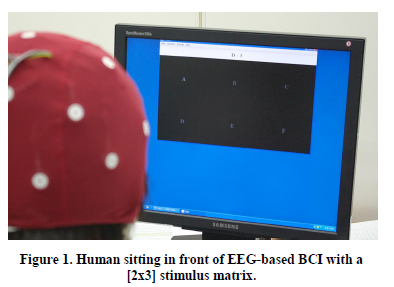
The testing was done with the matrices describe above and showed to be more accurate over the baseline methods currently used in other BCI systems.
The image came from the paper itself.
Discussion:
This paper was interesting because it discussed a way to connect technology physically with the brain. This paper provides ways to improve the algorithms used that will allow faster, more accurate systems to be developed. The only problem I had with the paper was very technical discussion in the middle. It feels like unless you are an expert on the subject there is no way to follow what is being discussed. Other than that I thought the idea and improvements were fun to read about.
Book Reading #50 - Why We Make Mistakes
Chapter 12: We’ Don’t Constrain Ourselves
Summary:
This chapter was about constraints and accordance in design. It described how these two things are very important in aspects such as safety. The medical field and Navy were used as examples to show how constraints and accordance are used for safety. Physical constraints are not the only problem we face, the author discussed attitudes in these two fields mixed with design constraints and how it affects safety.
Discussion:
I already understood the ideas behind this chapter about constraints and accordance but it was interesting to see more examples on how they affect our lives. I thought the medical examples with mix ups was really bad and do not understand how that has been handled that way for so long. I thought the section about attitude was interesting especially with the example with the medical field and the Navy. I was kind of shocked at the results of how many people would speak up if something was wrong in the medical field. I was also angry with the doctor at the end who was really ignorant and did not want to listen to anybody else.
Chapter 13: The Grass Does Look Greener
Summary:
This chapter is about how most people overlook the larger consequences in life and just realize the little ones. The example used is moving to California and how people love the weather but do not consider cost of living or commute time. This leads us to focus on the wrong expectations and how they shape our future happiness. In the book these are described as things that are easily observed and we give too much attention too.
Discussion:
This chapter was different because it did not talk about anything related to design. It mainly talked about the way humans think and how our happiness is effected.
Conclusion
Summary:
The conclusion of the book sums up the ways we can avoid making errors in our lives. Correcting our ways is very important in cases such as overconfidence. Thinking negatively can help us see some of the consequences of our actions and maybe save us from making bad decisions. Letting several people proof read something can help greatly. Happy people are less prone to errors because they are more creative. Money is a powerful influence and usually does not help to eliminate mistakes. Use your time wisely and take advantage of what you can, don't expect something that you can't get.
Discussion:
I liked this because it was a quick recap of some of the ways to prevent errors. I especially liked the very last paragraph where it talks about the currency of life. It says if you live in Texas don't expect to find a great bagel as you would in New York but instead learn to love the things that Texas offers such as rodeos because you will be happier.
Summary:
This chapter was about constraints and accordance in design. It described how these two things are very important in aspects such as safety. The medical field and Navy were used as examples to show how constraints and accordance are used for safety. Physical constraints are not the only problem we face, the author discussed attitudes in these two fields mixed with design constraints and how it affects safety.
Discussion:
I already understood the ideas behind this chapter about constraints and accordance but it was interesting to see more examples on how they affect our lives. I thought the medical examples with mix ups was really bad and do not understand how that has been handled that way for so long. I thought the section about attitude was interesting especially with the example with the medical field and the Navy. I was kind of shocked at the results of how many people would speak up if something was wrong in the medical field. I was also angry with the doctor at the end who was really ignorant and did not want to listen to anybody else.
Chapter 13: The Grass Does Look Greener
Summary:
This chapter is about how most people overlook the larger consequences in life and just realize the little ones. The example used is moving to California and how people love the weather but do not consider cost of living or commute time. This leads us to focus on the wrong expectations and how they shape our future happiness. In the book these are described as things that are easily observed and we give too much attention too.
Discussion:
This chapter was different because it did not talk about anything related to design. It mainly talked about the way humans think and how our happiness is effected.
Conclusion
Summary:
The conclusion of the book sums up the ways we can avoid making errors in our lives. Correcting our ways is very important in cases such as overconfidence. Thinking negatively can help us see some of the consequences of our actions and maybe save us from making bad decisions. Letting several people proof read something can help greatly. Happy people are less prone to errors because they are more creative. Money is a powerful influence and usually does not help to eliminate mistakes. Use your time wisely and take advantage of what you can, don't expect something that you can't get.
Discussion:
I liked this because it was a quick recap of some of the ways to prevent errors. I especially liked the very last paragraph where it talks about the currency of life. It says if you live in Texas don't expect to find a great bagel as you would in New York but instead learn to love the things that Texas offers such as rodeos because you will be happier.
Wednesday, April 13, 2011
Book Reading #49 - Why We Make Mistakes
Chapter 10: We All Think We’re Above Average
Summary:
This chapter states that most people have a private conceit that they are above average and this causes many mistakes. The only people that do not think they are above average are the people that are depressed. Many people that believe their results will be above average because they are, many businesses take advantage of this to make money. Many people don't change their thoughts over time because of lack of feedback. This overconfidence tends to go up as the tasks get harder. Many people believe that the more information we know the more expert we are when the fact is we just get more confident. Multiple studies showed that having more information for tasks such as horse racing, investing, or reading did not give an advantage when they also knew the summary.
Chapter 11: We’d Rather Wing It
Summary:
This chapter is about being an expert and novices differences. Experts require tons of practices to become experts. A special kind of practice is needed. Practice must be towards improving memory towards the subject for a long time. Most people are not experts and do not have a large library of information to choose from. Based on this average people create maps in their minds of how the situation is supposed to be, even if it is wrong. Many people ignore instructions and usually do their own things. It is also said that when we learn something one way we usually try to stick to that way.
Discussion:
These chapters were interesting because they discussed the overconfidence that I am sure all college students have felt. I thought it was really interesting in Chapter 10 when it was said that when people knew 40 things versus knowing 5 things the outcome was not favored towards the person who knew more. Knowing that we learn more from summaries makes sense because often when reading a large amount of material I get bored. Chapter 11 was kind of humorous to me because of how it said most people do not read instruction manuals. I'm a victim of this as I'm sure many others are but I do read the manuals when it's for something important. So I thought it was odd when nobody was able to wire the electrical plug or even install a car seat.
Summary:
This chapter states that most people have a private conceit that they are above average and this causes many mistakes. The only people that do not think they are above average are the people that are depressed. Many people that believe their results will be above average because they are, many businesses take advantage of this to make money. Many people don't change their thoughts over time because of lack of feedback. This overconfidence tends to go up as the tasks get harder. Many people believe that the more information we know the more expert we are when the fact is we just get more confident. Multiple studies showed that having more information for tasks such as horse racing, investing, or reading did not give an advantage when they also knew the summary.
Chapter 11: We’d Rather Wing It
Summary:
This chapter is about being an expert and novices differences. Experts require tons of practices to become experts. A special kind of practice is needed. Practice must be towards improving memory towards the subject for a long time. Most people are not experts and do not have a large library of information to choose from. Based on this average people create maps in their minds of how the situation is supposed to be, even if it is wrong. Many people ignore instructions and usually do their own things. It is also said that when we learn something one way we usually try to stick to that way.
Discussion:
These chapters were interesting because they discussed the overconfidence that I am sure all college students have felt. I thought it was really interesting in Chapter 10 when it was said that when people knew 40 things versus knowing 5 things the outcome was not favored towards the person who knew more. Knowing that we learn more from summaries makes sense because often when reading a large amount of material I get bored. Chapter 11 was kind of humorous to me because of how it said most people do not read instruction manuals. I'm a victim of this as I'm sure many others are but I do read the manuals when it's for something important. So I thought it was odd when nobody was able to wire the electrical plug or even install a car seat.
Subscribe to:
Posts (Atom)